
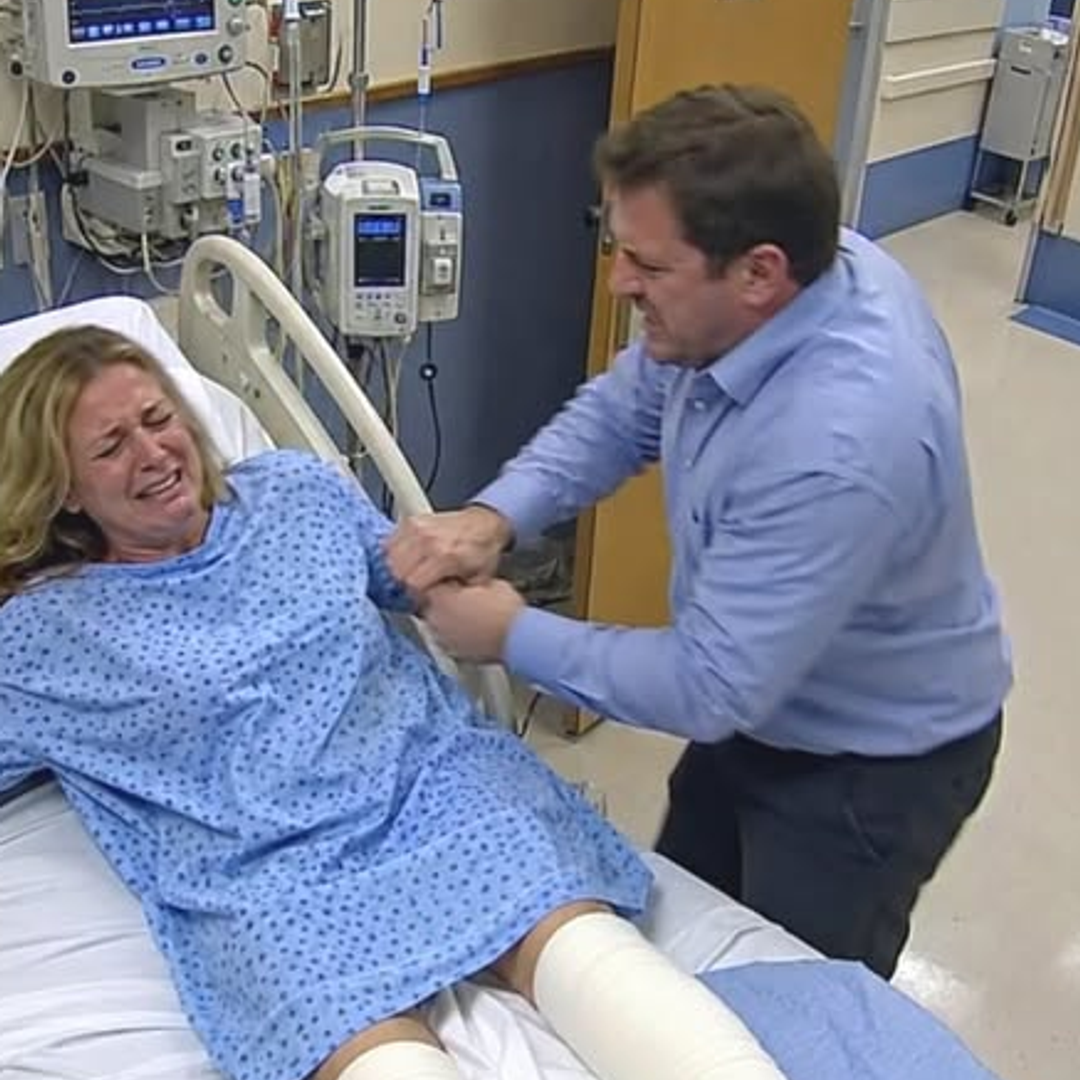
After a horrific car accident, I was rushed straight to the hospital. My husband stormed into my room, furious. “I’ve had enough of this act!” he yelled. “Get out of that bed. I’m not wasting another dollar on you!” He seized my arm and tried to drag me off the mattress. When I fought to stay where I was, he slammed both fists into my stomach. What happened afterward changed everything. The room smelled of antiseptic, old coffee, and clean bandages. Beside my bed, the heart monitor kept a slow rhythm that had become the only thing holding me together. Beep. Breathe. Beep. Both legs were locked inside heavy plaster casts from my thighs to my feet. My ribs were fractured, stitches were hidden beneath my hair, and my swollen wrist still carried the hospital band with my name printed across it. Three weeks earlier, a normal afternoon had ended beneath flashing emergency lights and broken glass. My admission had been recorded at exactly 6:42 p.m. For twenty-one days, I had waited for Caleb to visit me with flowers, clean clothes, or even one kind word. Instead, my husband entered looking like a man collecting an overdue debt. “Enough of this drama, Rebecca,” he said from the foot of the bed. His shirt was perfectly ironed, and his expensive cologne reached me before he did. “Get up. We’re going home.” The medication made my thoughts slow, but not slow enough to misunderstand him. “Caleb, I can’t.” His jaw tightened. “Don’t start with me.” “My legs are broken.” “I know what the doctors said.” He leaned over the bedrail, mint sharp on his breath. “I also heard the billing department talking about another payment. I’m done throwing money away on this performance.” Performance. The casts were not a performance. Neither were my fractured ribs, the stitches, the swollen wrist, or the medical chart hanging outside my room with REBECCA WALKER printed clearly across the top. But Caleb had always known how to turn my pain into an inconvenience for him. We had been married for eleven years. After Emma was born, I gave up my accounting career because Caleb insisted our daughter needed one parent home full time. I packed his lunches, managed our household bills from the kitchen table, attended every parent-teacher conference alone, and learned which silences could keep an argument from exploding. For years, I mistook keeping the peace for being loved. “I gave up everything for this family,” I whispered. “You’re my husband. You’re supposed to help me.” He looked at me without a trace of concern. “Help you?” he said. “You’re nothing but a burden.” The monitor continued beeping beside me. Not a patient. Not his wife. Just a burden. Caleb grabbed the blanket and ripped it downward. Then his fingers closed around my upper arm. I reached for the bedrail, but my hands were shaking so hard that my wedding ring tapped against the metal. “Caleb, stop.” He pulled. Pain tore through my ribs as the weight of both casts dragged across the mattress. The monitor’s steady rhythm broke into rapid warning tones. “Get out of this bed,” he hissed. “I’m not paying for a wife who can’t make herself useful.” Something inside me finally stopped bending. I did not scream at him. I did not strike him. I did not unleash every word I had swallowed during eleven years of marriage. I wrapped both hands around the rail and said, “No.” For one second, Caleb looked stunned—as though the possibility of my refusal had never occurred to him. Then he drove both fists into my stomach. The pain turned the room white. All the air vanished from my lungs as my body folded forward against the weight of the casts. A scream tore from me while the heart monitor erupted into a frantic alarm. Outside the room, the hospital had records of everything. Caleb’s name was in the visitor log. My medication schedule was at the nurses’ station. A bright yellow fall-risk warning was attached to my file. Everyone there understood that I was a patient. Caleb was the only person determined to treat me like a problem. His face burned red as he bent over me. One hand still clutched the blanket while the other slowly formed another fist. “You don’t get to talk back to me,” he snarled. “Do you understand?” I stared past him toward the open doorway. The hallway looked impossibly normal. A supply cart rolled somewhere nearby. Someone laughed softly near the nurses’ station. At that moment, Emma was probably imagining her father beside my bed with flowers in his hands. Her picture was still taped to the wall beside me. COME HOME SOON, MOMMY. I tightened my grip on the rail and remembered surviving the crash. I remembered opening my eyes beneath the operating-room lights and promising myself I would make it home to my daughter. Caleb drew his arm back again. The monitor shrieked. His fist started moving toward me—and the silver handle on my hospital door suddenly turned. Type DOOR and I'll continue. (I know you're curious about the next part, so please be patient and read on in the comments below. Thank you for your understanding of the inconvenience. please leave a 'DOOR' comment below and give us a "Like " to get full story ) See less
