
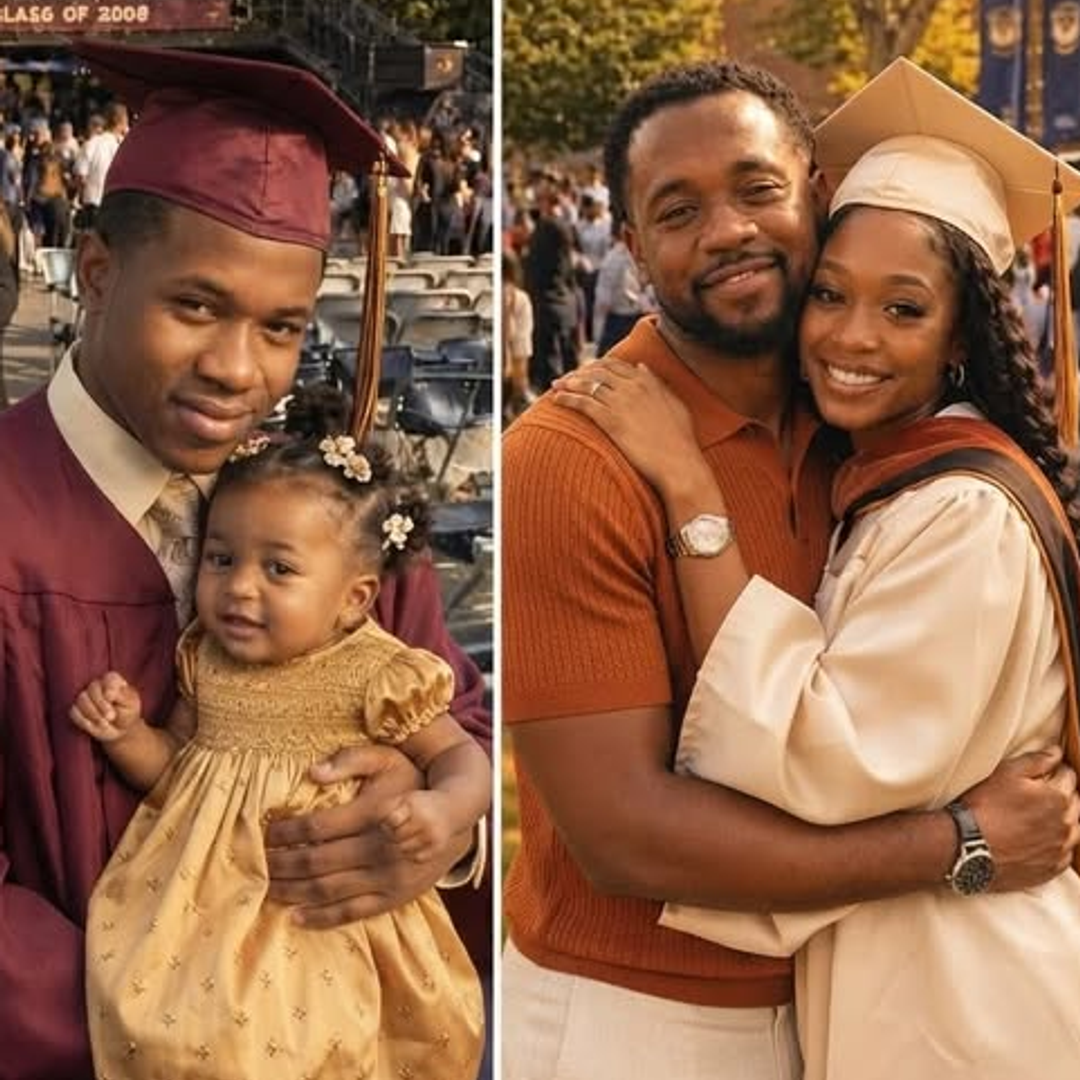
I became a father at 17 and raised my daughter on my own — 18 years later, an officer knocked on my door and asked, “Sir, do you have any idea what she’s done?” I became a father at seventeen. You know how it goes — crazy high school love. When my girlfriend found out she was pregnant, it was terrifying, but I stepped up. I worked and studied at the same time to give my child everything she needed. I promised we would get married. By the time I finished high school, my daughter Ainsley was already by my side. It wasn’t easy, but I was happy. I love Ainsley deeply, and I don’t regret a thing. After we graduated, my girlfriend told me that Ainsley was only holding her back and that she was still too young for this — then she left. She went off to college and never came back. Not once did she ask about her daughter. So I raised her alone. She grew into an incredible young woman — Ainsley is kind, cheerful, and caring. When her graduation came 18 years later, I stood there watching her on stage, almost in tears with pride. Ainsley went out to celebrate with her friends and came home late that night. She rushed upstairs to her room. Then, suddenly, there was a knock at the door. When I opened it, two police officers were standing on my porch. My blood ran cold. One of them greeted me politely and asked: “Are you Ainsley’s father?” I felt a flicker of unease. “Yes… what happened?” The officers exchanged a quick glance. Then one of them continued: “SIR, DO YOU EVEN HAVE ANY IDEA WHAT YOUR DAUGHTER HAS DONE?” My heart pounded in my chest. Then he added, “You deserve to know.” And with every word the officer spoke, it felt like the ground was slipping out from under my feet. (I know you're all very curious about the next part, so if you want to read more, please leave a "YES" comment below!), See less
That night, as Ainsley and I settled in for a long conversation, I felt the weight of our situation pressing heavily upon us both. The initial shock of the officers’ visit had morphed into a combination of concern and determination. Ainsley needed guidance and support now more than ever, and I was keenly aware that this moment could significantly shape her character.
“Dad?” she started, her voice wavering as she curled up next to me on the couch. “What if they press charges? I mean, I didn’t do anything intentionally, but what if they think I’m just some irresponsible kid?”
I could see how frightened she was about the possibility of facing legal repercussions. “Sweetheart, let’s focus on what we can control. The officers seemed more interested in helping you understand the consequences of your actions rather than punishing you harshly. This is your chance to show them you can take responsibility.”
Her eyes, often filled with optimism and laughter, were now clouded with apprehension. “I just wanted to celebrate with my friends—to feel normal after all the pressure of school.”
I placed my arm around her shoulders, pulling her closer. “I get it. Graduation is such a huge milestone, and it’s natural to want to celebrate. But actions have consequences, and it’s important to remember that whatever fun we have should not come at the expense of someone else’s peace or property. The prank seemed harmless to you, but it affected others, and now, we need to make things right.”
We stayed up late that night talking about everything—her graduation, her dreams for college, and the lessons she was learning through this incident. Somewhere between her fears and my reassurances, the realization struck me: this was an opportunity for growth, a chance for Ainsley to learn from a mistake.
“Maybe I can talk to the neighbors?” she suggested, biting her lip as if considering the weight of her words. “I should apologize and see if they’re okay with me helping them pay for the repairs.”
