
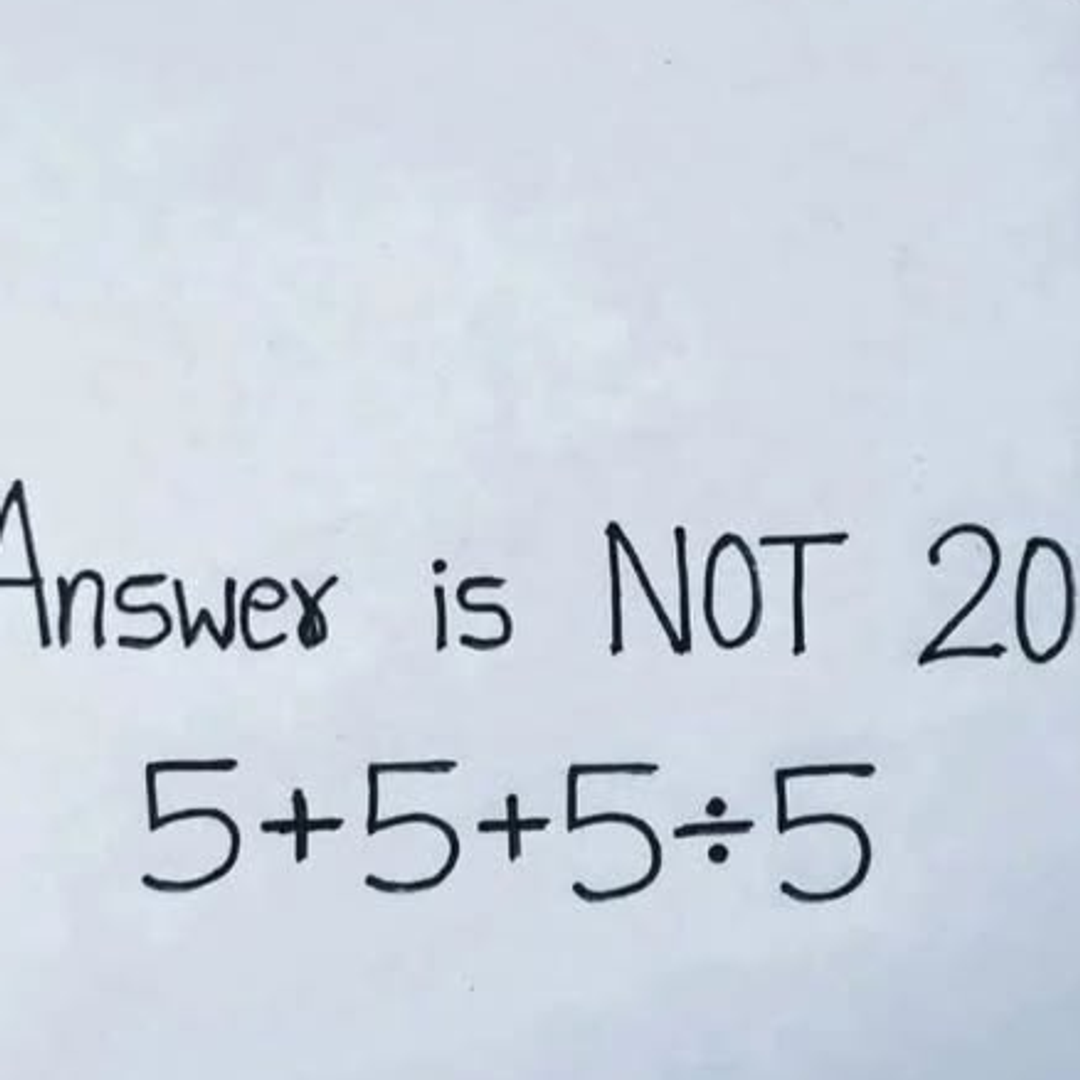
stay focused while solving this math problem
By focusing on each component, you'll not only arrive at the solution but also deepen your understanding of the concepts involved. Remember, mastering math is all about practice and patience! Math can often feel overwhelming, especially when faced with complex problems. However, equipping yourself with effective strategies can greatly enhance your ability to stay focused and solve problems efficiently. In this article, we’ll dive deeper into various tactics to maintain concentration, address common challenges, and develop skills that will ultimately lead to improved mathematical performance.
Understanding Mathematical Concepts
Before you tackle a math problem, it's crucial to grasp the underlying concepts. If you rush into solving problems without a solid understanding of the fundamentals, you’ll likely encounter confusion and frustration. Spend some time reviewing the concepts relevant to the problem at hand. These could include:
- Elementary Arithmetic: Mastery of addition, subtraction, multiplication, and division.
- Algebra: Understanding variables, expressions, equations, and how to work with them.
- Geometry: Familiarity with shapes, sizes, relative positions, and properties of space.
- Statistics: Knowing how to collect, analyze, interpret, and present data.
- Calculus: Understanding limits, derivatives, integrals, and their applications.
Once you feel confident in these areas, you’ll find it easier to approach complex problems. If certain concepts are still foggy, consider revisiting them via textbooks, online resources, or educational videos to reinforce your understanding.
Breaking Down the Problem
Every math problem can be dissected into smaller parts. Follow these steps to break a problem down effectively:
- Identify What Is Given: Pinpoint the pieces of information provided in the problem.
- Identify What Is Required: Understand what the question is asking. What do you need to find out?
- Look for Relationships: Note how the different pieces of information relate to one another. Are there mathematical operations that define these relationships?
- Visualize: Sometimes drawing a diagram or pictorial representation can clarify complex relationships. For example, in geometry, sketching shapes can help track dimensions and relationships easily.
Creating a Problem-Solving Plan
Having a strategic plan will guide you through the problem-solving process. Here’s how to develop one:
- Choose Your Tools: Decide if you'll need a calculator, graph paper, or software applications like GeoGebra for visualization.
- Select the Right Method: Determine if you will be using algebraic manipulation, factoring, or applying the quadratic formula, for example. Use the approach you’re most comfortable with, but don’t hesitate to explore new methods if you're open to learning.
- Outline Steps: Write down the steps you’ll follow. Creating a road map will keep you organized and focused as you work.
Effective Calculation Techniques
As you begin your calculations, remember the following tips:
- Estimate First: Before diving into calculations, estimate what a reasonable answer might be. This will serve as a benchmark and help you catch mistakes early on.
- Step-by-Step Calculation: Tackle one part of the problem at a time. If you're solving an equation, solve it progressively while checking each step.
- Maintain Neatness: Keep your workspace tidy. Clear notation will reduce the chance of confusion, especially in lengthy calculations.
Double-Checking Your Work
Once you arrive at an answer, it’s essential to review your work thoroughly. Follow these steps to ensure accuracy:
- Backtrack: Go through your steps in reverse. This will help you confirm whether each operation was performed correctly.
- Cross-Check: If possible, check your answer against other methods or formulas.
- Reach Out: If you’re still uncertain, discuss the solution with peers, teachers, or tutors. They can offer new perspectives and help clarify doubts.
