
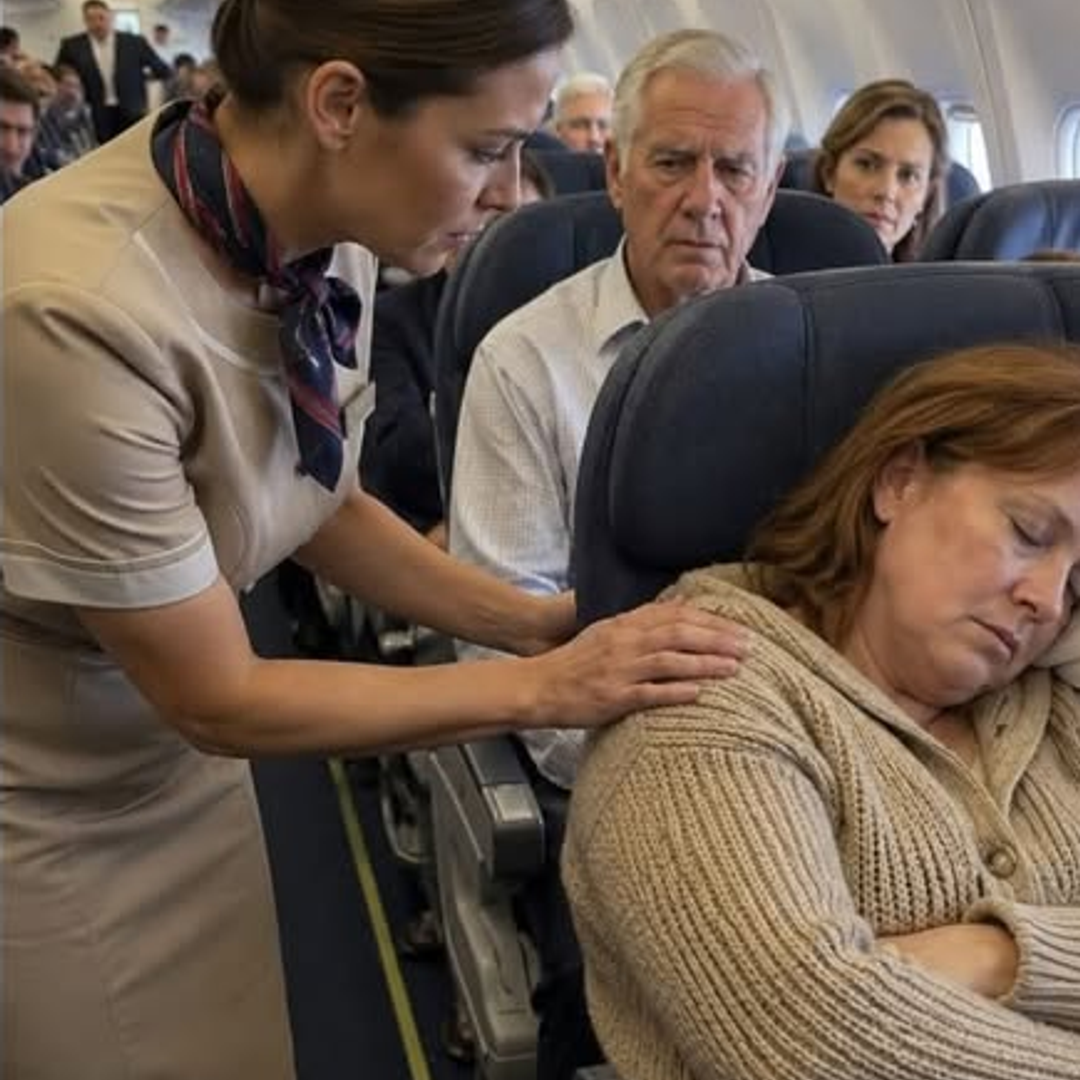
She Was Sleeping in Seat 8A — Until the Captain Asked if Any Combat Pilots Were On Board She looked like any other passenger in seat 8A, quietly sleeping through a long overnight flight—until the captain’s voice suddenly cut through the cabin. “If there is a combat pilot on board, please identify yourself immediately.” Nearly 300 passengers froze. Nobody suspected the woman in the green sweater was anything more than an ordinary traveler. The plane was cruising at 35,000 feet over the Atlantic, traveling from New York to London. Inside the darkened cabin, everything had seemed routine—engines humming, passengers sleeping, watching movies, or quietly passing the time. It should have been another uneventful flight. Then came the announcement. “Ladies and gentlemen, this is your captain speaking.” But his voice sounded different. Tense. Urgent. “We are experiencing a technical issue that requires immediate assistance. If anyone aboard has combat pilot experience, please contact the crew.” The cabin fell silent. Conversations stopped. Passengers exchanged confused, nervous looks. Hearing a request like that aboard a commercial flight was almost unimaginable. Nobody knew what kind of emergency could possibly require a combat pilot. In seat 8A, the woman in the green sweater shifted slightly, still half-asleep—unaware that the past she had kept hidden was about to resurface. Her name was Mara Dalton. Nobody aboard knew that. To the man beside her, she was simply another tired passenger. To the flight attendants, she was quiet and polite, refusing dinner and asking only for water and a blanket. To everyone else, she blended into the background. Exactly as she wanted. She had chosen anonymity. A window seat. An overnight flight. A chance to simply be Mara. Not Captain Dalton. Not the decorated fighter pilot. Not the officer who had flown dangerous missions. read the full story in comment See less
The cockpit buzzed with a blend of tension and hope, buzzing radios and the low hum of flight instruments creating a unique soundscape that seemed both foreign and deeply familiar to Mara. Encouraged by the captain’s resolute expression, she reviewed everything she had learned in years of training—both as a fighter pilot and an instructor. This was no routine flight, and she needed to summon every ounce of skill she possessed.
“Let’s start by running through the cockpit checks,” she said, her voice steady. The captain nodded, and together they began examining the array of instruments before them.
“Lost navigation means we need to switch to manual controls,” she instructed with authority, sliding into familiarity as they adjusted dials and switches. “Can you pull up the backup systems?”
“Right,” he said, his fingers moving deftly. “In case we need to revert to basic navigation tools.”
As they worked in tandem, every adjustment sparkled with urgency that steadied Mara’s nerves. Memories of aircraft flights, warning alarms, and tactical maneuvers flooded her mind like a well-rehearsed drill. Here in the cockpit, she was not only saving the plane but reclaiming her identity as much as she was helping the passengers on board; that of a leader trained to handle crises, a keeper of lives.
The minutes stretched like elastic, each tick of the clock weighing heavy in the late hours of night. The air filled with an intensity that was electrifying. “What altitude are we currently at?” Mara inquired, momentarily diverting her focus from the navigation systems to glance out the cockpit window, where blackness stretched infinitely.
