
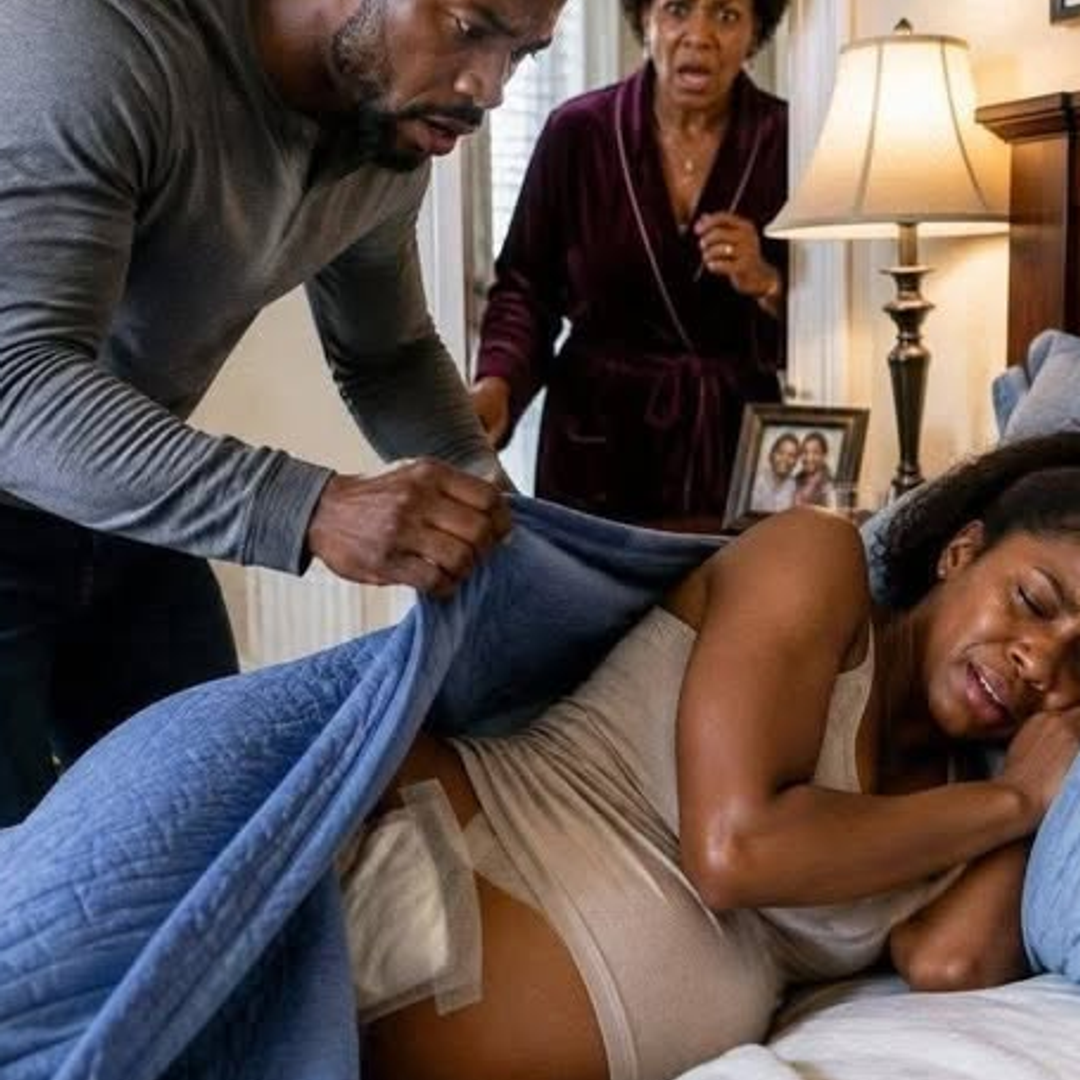
MY PREGNANT WIFE STOPPED LEAVING THE BEDROOM… MY MOTHER SAID SHE WAS LYING. THEN I LIFTED THE BLANKET AND DISCOVERED THE TRUTH SHE HAD BEEN FORCED TO HIDE. Rachel was seven months pregnant when she stopped being the woman I knew. The woman who filled our small San Antonio apartment with music. The woman who laughed while doing laundry. The woman who made our little home feel bigger than it really was. Suddenly… She stayed in bed all day. Covered by the same blue quilt. Barely eating. Barely speaking. At first, I told myself it was normal. Pregnancy was hard. Her blood pressure had been unstable. The doctor warned us the final months might be difficult. So I did everything I could. Every morning before work, I left water beside her bed. Fresh fruit. Crackers. Prenatal vitamins. Sometimes I left little notes: “Rest today. I love you.” “Take care of yourself and our baby.” I thought my job was to protect her. But slowly… Something changed. Rachel stopped letting me help her. If I tried to help her walk, her body would tense. If I reached toward her, fear flashed across her face. She stopped changing clothes in front of me. She refused help getting into the shower. And she never let go of that blue quilt. Then my mother Margaret started asking questions. “She’s hiding something.” I hated hearing those words. “Mom, she’s pregnant.” “A woman doesn’t stay hidden under a blanket all day unless there’s something she doesn’t want you to see.” I defended Rachel. At least I thought I did. But suspicion is dangerous. Because once someone plants doubt in your mind… You start looking for proof of something that isn’t there. I began wondering why Rachel was afraid. Why she cried when she thought I wasn’t listening. Why she whispered: “Please don’t ask me.” Then one afternoon, I came home early. A power outage had closed the hardware store. I stopped at the bakery and bought Rachel’s favorite cinnamon bread. But when I opened the apartment door… Something felt wrong. The soup I left for her was untouched. Her water glass was full. The apartment was silent. I found her lying on the bed. Staring at the ceiling. Her eyes were swollen from crying. “Rachel…” She wouldn’t look at me. “I need you to tell me what’s happening.” “Nothing.” “You’re not eating. You can barely walk. I heard you crying last night.” Her fingers tightened around the blue quilt. “Please don’t ask me.” Those words scared me more than any confession. Then my mother arrived. Without calling. Using the spare key. She walked into our bedroom carrying dinner rolls and the same judgment she always carried. “This has gone on long enough,” she said. “Daniel works himself exhausted while you lie here acting like royalty.” Rachel went pale. “Please, Margaret.” But my mother stepped closer. “What exactly are you hiding under that quilt?” “Mom. Stop.” She ignored me. “An innocent person wouldn’t be afraid of a simple question.” Rachel started crying. “Please don’t touch me.” And that was the moment I realized… She wasn’t afraid of being exposed. She was afraid of what would happen if I saw the truth. My hand shook as I reached for the blue quilt. Rachel looked at me with tears in her eyes. “No, Daniel…” “If you see it, everything will fall apart.” The room became completely silent. Then I lifted the blanket. And what I saw underneath made me forget how to breathe. My wife hadn’t been hiding a betrayal. She had been hiding pain. Pain someone had caused. And when I looked up… The person responsible was standing in the doorway. Watching. Pretending to know nothing. Part 2 reveals what Daniel discovered beneath the blanket and the secret Margaret had been hiding for months. See less
The sense of relief that settled over Rachel and me felt fragile, as if we were teetering on the edge of a precipice. After lifting the blue quilt that had become so emblematic of Rachel's struggles, our lives transformed in that single moment. There was no longer a denial of the pain or the fear that had wrapped around her like a suffocating blanket, but rather a commitment to confront the dark shadows that had crept into our lives.
As we began to process the enormity of what had happened, I could see the toll it had taken on Rachel. Her cheeks were still stained with tears, her eyes haunted by the memories of her suffering. The glow that had once illuminated our home felt dimmed, replaced with a heaviness that was palpable. But within that dimness, I noticed a flicker of hope. It was clear that this was the first step—a recognition that the truth can be brutally painful, yet necessary for healing.
