
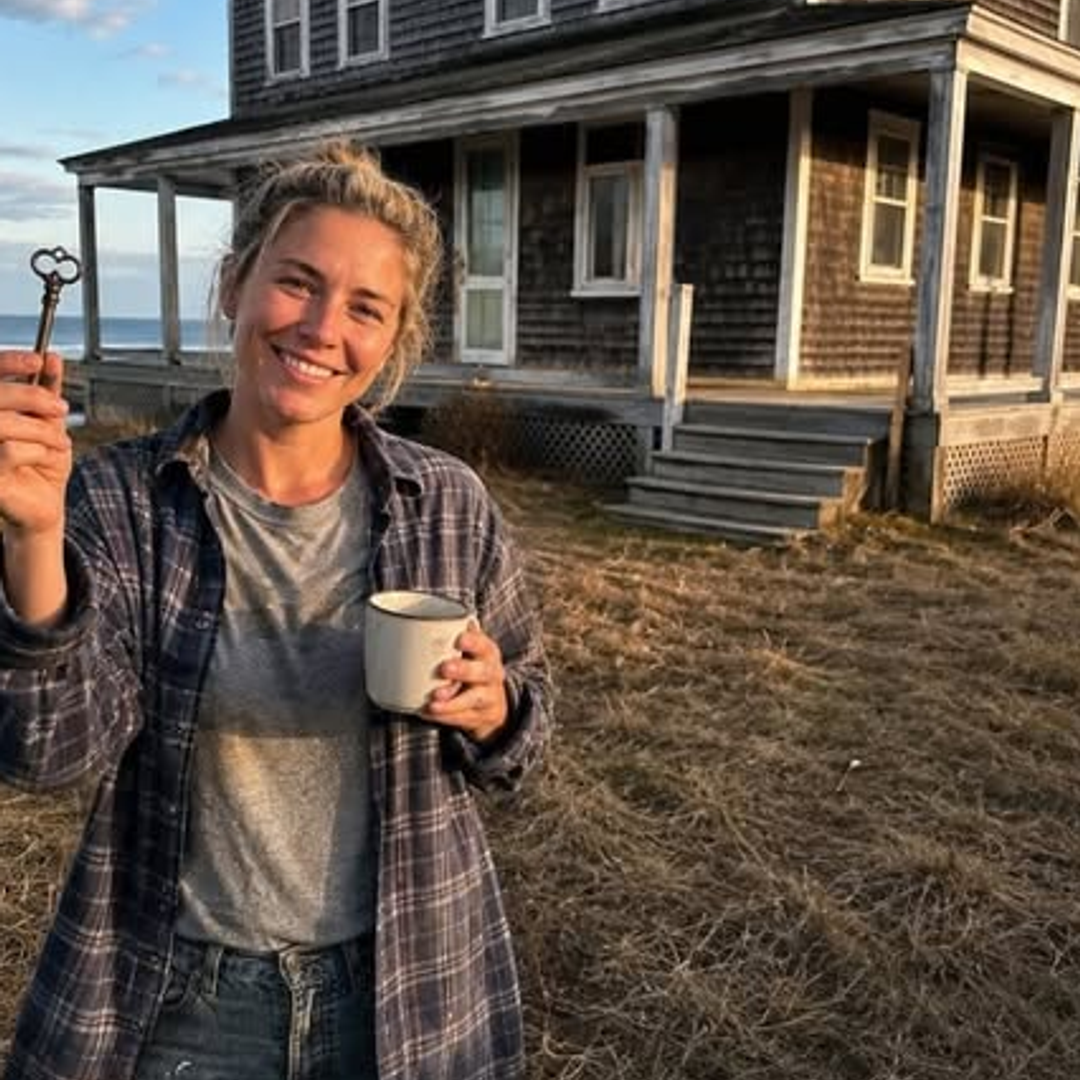
My mom mocked me: “Your sister just bought a beautiful house!” At Christmas dinner, my sister smirked: “When will you settle down?” I smiled: “I already did. I just didn’t invite anyone who doubts me.” That left my sister frozen in shock. “Your sister just bought a beautiful house,” my mother announced, lifting her wineglass above the Christmas table. “A real house.” The candles flickered against the silver serving dishes. My father stared at his plate. Megan went still beside him. At the far end of the table, my cousin looked at me, then quickly looked away. Vanessa leaned back in her chair, cream cashmere smooth across her shoulders, one manicured hand resting beside her untouched napkin. That small, satisfied smile had been on her face all evening. My mother turned toward me with a polished expression that looked almost kind. “Isn’t that wonderful, Claire?” she asked. “It’s such a comfort to see one of my daughters truly settled.” One of my daughters. She let the words hang there while several relatives murmured agreement. Vanessa lowered her eyes with false modesty, but the corner of her mouth lifted. “Mom, stop,” she said. She did not want her to stop. My mother smiled wider. “It’s not just a house. It’s responsibility. Commitment. Vision. It means something.” Then she looked directly at me. “I hope you’re not feeling pressured, sweetheart. Everyone has their own timing. We just worry sometimes. You’re talented, of course, but talent and stability aren’t the same thing.” The room tightened. I kept my fork in my hand and cut the same piece of food twice. That was an old habit—something small and precise to keep my anger from showing. Vanessa dabbed her lips with her napkin. “I mean, Claire has always been more atmospheric than practical,” she said. A few people laughed. Not because it was funny. Because Vanessa said it confidently, and families like mine often reward confidence before truth. “She’s always moving from project to project,” Vanessa continued. “I just don’t know how anyone lives with that much uncertainty.” I looked at her. Perfect hair. Perfect blouse. Perfect posture. She looked like the version of adulthood my mother had spent years displaying in front of relatives. Vanessa knew how to turn ordinary milestones into family theater. A promotion became a celebration dinner. A dating anniversary became a weekend everyone had to hear about. A couch delivery became proof that she was “building a life.” My work never received that treatment. I restored estate furniture, consulted on historic interiors, negotiated with collectors, managed demanding clients, and ran a specialized business people booked months in advance. My mother described it as “working with old furniture.” If I missed a holiday because of a deadline, Vanessa called me free-spirited. If I arrived tired after finishing a commission, she called self-employment unstable. If someone praised my work, she reminded them that I was still trying to make it permanent. Together, they had built a version of me the family understood easily: talented, unusual, unfinished. For years, I corrected them. Then I stopped. Explaining yourself over and over becomes its own humiliation. Eventually, silence felt more dignified than begging people to see what was directly in front of them. But silence has a cost. People begin to mistake restraint for agreement. They repeat the same story until even they forget it was invented. That Christmas, my mother believed she was comparing two daughters. She had no idea what I had done six months earlier. No one at that table did, except my grandmother. She sat near the end of the table in a dark blue dress, her hands folded calmly in her lap. When I glanced toward her, she gave me the smallest nod. Three days earlier, she had called me and asked whether I was coming home for Christmas. “I haven’t decided,” I had told her. “Then decide one thing first,” she said. “If you go, don’t go to be judged. Go already knowing who you are.” I had carried those words with me through the drive from Maine to Connecticut. I had carried something else, too. A brass key rested in the pocket of my coat in the hallway. Before dinner, my mother had noticed my work boots and frowned. “Honestly, Claire, you always look like you just came from fixing a dock.” “I came from home,” I said. She barely heard me. Vanessa swept into the room, kissed the air beside my cheek, and announced that Mom had already been telling everyone about the closing. The house became the center of the evening before the food was served. The yard. The foyer. The window seat. The neighborhood. The guest room. The original hardwood floors Vanessa spoke about as though she had personally rescued them. My mother repeated every detail with pride, then sharpened each compliment into a comparison. Now, seated beneath the warm dining room lights, she raised her glass again. “Your sister just bought a beautiful house,” she said louder, making sure everyone heard. “I’m only curious, Claire. When will you finally settle down?” Vanessa’s smile widened. “Yeah,” she said. “When are you going to stop floating around and start building a real life?” That was the moment. Not because it was the cruelest thing they had ever said. Because it was the most practiced. The lie had been repeated so many times that they no longer recognized it as cruelty. The whole table waited for my usual response. A strained smile. A joke. A quick change of subject. Anything that would let them keep their version of me intact. I placed my fork beside my plate. The small click against the china sounded louder than it should have. My mother’s smile remained fixed. Vanessa tilted her head, already certain she had won. I touched my napkin once, then folded my hands. “I already did,” I said. The air seemed to stop. Vanessa’s smile stalled. My mother blinked. “What?” she asked. I held her gaze. “I already settled down.” No one moved. My fingers curled beneath the edge of the table as I pictured the brass key waiting in my coat pocket. Then I looked at Vanessa. “I just didn’t invite anyone who doubts me.” Her smirk vanished. My mother lowered her glass. And in the silence, Vanessa leaned forward and whispered, “What did you just say?” This story is shared for inspirational purposes. The names of the characters have been changed. This is not a news outlet. **(Full story continues in the first comment.)** Turn on the "View all comments" option to see more! See less
